
Spiked Harness for Small Dogs: Fit, Features and Safe Use
A spiked harness for small dogs gives a compact dog a bold look while functioning as an adjustable walking harness. A well-designed model combines a stable body panel, breathable lining, secure straps and removable metal hardware. Appearance matters, but fit, comfort and responsible use matter more.
This guide explains how to compare materials, measure a small dog, adjust the vest and care for removable studs. It also clarifies what a spiked dog vest cannot do. Close adult supervision and avoiding unsafe encounters remain essential.
What Is a Spiked Dog Vest?
A spiked dog vest is a body-style harness with metal studs or cone-shaped spikes on the back or neck. Many models also include breathable mesh, reflective trim, quick-release buckles and a rear leash attachment.
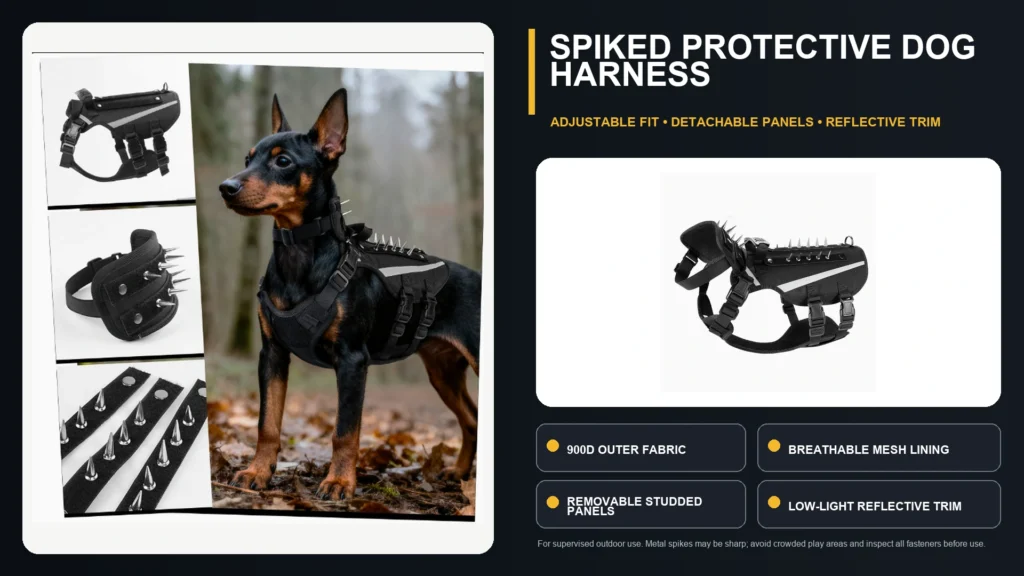
Some products have permanently fixed hardware, while others use detachable studded panels. A removable design lets the owner switch to a smooth surface when they do not need spikes. It also reduces the risk of accidental contact.
Product names are not always consistent. Sellers may also list a spiked vest as a spike harness, spike vest, or one of several spiked dog harnesses. Compare the measurements and construction instead of choosing from the product name alone.
Why Small Dog Owners Consider This Style
A spiked harness for small dogs should allow a natural stride, free shoulder movement and comfortable breathing. It must not press against the throat or rub behind the front legs. Metal hardware should remain on the exterior, away from the dog’s skin and areas the dog can reach.
How to Choose a Spiked Harness for Small Dogs
Begin with the intended use. For controlled walks, prioritize fit, low product weight, smooth lining and easy adjustment. For crowded spaces, meetings with other dogs, crate use or close play, remove the spike panels or choose a smooth harness.
How to Measure a Small Dog
Measure your dog while it is standing naturally.
Neck opening: Measure around the area where the front opening will rest.
Lower neck girth: Measure around the base of the neck where the lower strap will sit.
Chest girth: Measure around the widest part of the rib cage, usually just behind the front legs.
Back length: Measure the section of the back that the body panel will cover.
Compare every measurement with the seller’s individual size chart. Treat weight only as a secondary reference. If the measurements are between sizes, follow the seller’s sizing rule. Or ask for guidance instead of choosing the smaller size.
The American Kennel Club recommends measuring your dog while it stands. Pay close attention to neck and chest girth when choosing a harness. Its guidance also explains the commonly used two-finger fit check. See the AKC dog gear measuring guide for additional measuring information.
How to Put On and Adjust the Vest
- Let the dog inspect the smooth harness while rewarding calm behavior.
- Remove all detachable spike panels.
- Open the buckles and loosen the adjustable straps.
- Position the harness without forcing the dog’s head or legs.
- Fasten every buckle and adjust both sides evenly.
- Check that approximately two fingers fit beneath the straps.
- Confirm that the front does not press against the throat.
- Make sure the shoulders and front legs move freely.
- Reattach the panels and check that every snap and hook-and-loop area fully engages.
- Connect the leash and complete a short indoor walking test.
Recheck the spiked dog vest after several minutes of movement. Stop immediately if you notice coughing, chafing, restricted movement, distress or loose hardware.
The AKC harness-fitting guide recommends checking for rubbing, free leg movement and possible escape points after adjustment. Growing dogs and dogs with seasonal coat changes require more frequent fit checks.
Essential Safety Rules for Spiked Hardware
A spiked vest needs extra care because sharp metal parts can harm the wearer, another animal, or a person by accident.
Never leave the product on an unattended dog. Do not use bent, loose, corroded or damaged spikes. If the dog attempts to chew the hardware or fabric, remove the harness immediately.
VCA Animal Hospitals advises that a well-fitted harness should not restrict front-leg movement. It should not rub behind the elbows. It also recommends supervising dogs while they wear harnesses and removing the equipment when direct supervision is unavailable. Read the VCA collar and harness guidance.
Cleaning and Storage
Detach the studded panels before cleaning and follow the manufacturer’s care label.
If the manufacturer gives no cleaning instructions, clean spots with mild soap and cool or lukewarm water. Avoid bleach, harsh chemical cleaners, tumble drying and direct heat.
Wipe the metal components dry after rain and allow every fabric layer to air-dry completely before reassembly.
Store the spike vest out of reach of pets and children. When possible, detach and wrap the metal panels separately to reduce accidental contact and prevent damage to nearby items.
Common Buying and Fitting Mistakes
Choosing by Breed Photograph
Dogs of the same breed can have different neck, chest and back proportions. Always use measurements rather than relying on the breed shown in a product photograph.
Assuming “Small” Is Standard
A small studded dog harness is not a standardized measurement. Always compare the dog’s measurements with the chart for the exact product you plan to buy.
Treating Spikes as Guaranteed Protection
Decorative or deterrent hardware cannot make an unsafe encounter safe. A harness is not a replacement for training, leash control or avoiding aggressive animals.
Leaving the Panels Attached Constantly
Remove the metal panels for close play, travel, or storage.
Remove them in any place where they could spread on something.
They could also injure someone.
Ignoring the Interior
Comfortable mesh, smooth seams and correct strap placement matter more than exterior styling.
Skipping the Movement Test
A harness can appear to fit while the dog is standing but shift during walking, sitting or turning. Always complete a short movement test.
Frequently Asked Questions
Do Spiked Dog Harnesses Prevent Dog Attacks?
No. Spiked dog harnesses should never be treated as bite-proof or attack-prevention equipment. Removable studs may provide a visual deterrent or added exterior coverage, but they cannot guarantee protection.
What Is the Difference Between a Spiked Vest and a Regular Harness?
The main difference lies in the metal hardware, which you can fix in place or remove. Both products require correct sizing, secure buckles and an appropriate leash attachment. Spikes add responsibilities rather than replacing normal harness safety.
Is a Spiked Dog Vest Suitable for Daily Walks?
It may be suitable for controlled, supervised walks when properly fitted. Remove the studded panels in crowded places or whenever close interaction with people or animals is likely.
Is a Spiked Harness for Small Dogs Too Heavy?
That depends on the product weight, spike size and the dog’s individual build. Compare the listed dimensions and weight, then observe the dog during a brief indoor test. Remove it if the dog appears stiff, unbalanced or reluctant to move.
Can you remove the detachable spike panels?
Some designs use removable panels secured with snaps and hook-and-loop fastening. Always follow the product instructions and completely secure every attachment before you use it.
Can a Hook-and-Loop Dog Vest Be Machine-Washed?
Only if the care label permits machine washing. Remove metal panels and close the hook-and-loop sections first. Spot cleaning or gentle hand washing may be more suitable for structured products.
Can My Dog Sleep in a Spike Vest?
No. Remove the spike vest during sleep, crate use and vehicle travel. Pointed components can resonate on surrounding surfaces or cause accidental injury.
How Often Should I Inspect a Spike Harness?
Check the spike harness before every use and again after cleaning. Inspect the spikes, snaps, hook-and-loop fastening, buckles, straps, stitching and leash attachment.
Is Every 900D Harness Fully Waterproof?
No. The outer fabric may resist water while the seams, mesh, buckles and straps admit moisture. Look for tested specifications before describing the complete product as waterproof.
Are Reflective Strips Enough for Night Walks?
No. Reflective strips work only when illuminated. Continue using suitable lighting, a secure leash and supervision.
Final Thoughts
The best spiked harness for small dogs fits each dog well. It allows natural movement. It can convert into a smooth harness when you don’t need metal panels. Removable panels, breathable lining, adjustable straps and reflective details are useful, but none of them replaces supervision.
Measure before ordering, perform the initial fitting without the spikes and keep every outing controlled. When appearance and safety conflict, remove the metal panels and use the simpler configuration.
You can view the adjustable ANZELAE model or browse more products in the Dog walking gear collection.