Waterproof Dog Boots: 9 Essential Paw Protection Tips
Waterproof dog boots can make rainy walks, snowy sidewalks, muddy trails, and camping trips more comfortable for your dog. This works best when designers create well-designed boots and the boots fit correctly. The right pair forms a practical barrier between sensitive paws and wet, dirty, or rough ground. It still allows a natural stride.
However, not every product works the same way. Some dog shoes cover only the paws.
Dog socks are mainly for light indoor use. Dog paw balm adds a thin barrier, but has no protective sole. Full-leg gaiters add coverage above the paw, which can be especially useful in deep mud, wet grass or snow.
This guide explains when paw protection helps. It shows how to compare different options. It also explains how ANZELAE waterproof dog leg protectors support outdoor adventures.
Why Dogs May Need Paw Protection Outdoors
Dogs have naturally durable paw pads, but weather and terrain can still create problems. Ice, road salt, wet mud, sharp debris and slick surfaces can make some walks uncomfortable. The American Kennel Club’s dog boot guide notes that well-fitted boots protect paws. They help in harsh weather, uneven terrain, and deicing products.
Protection may be useful for:
- Rainy walks and wet grass
- Snow, slush and treated sidewalks
- Muddy hiking or camping trails
- Rough outdoor surfaces
- Dogs that repeatedly collect snow or dirt around their paws
- Keeping legs and paws cleaner during travel
In these cases, well-fitted waterproof dog boots add a helpful barrier and reduce the dirt brought home.
No product makes unsafe conditions completely safe. Avoid extremely hot pavement, sharp terrain and prolonged exposure to severe cold. Check your dog’s paws before and after every outing.
Waterproof Dog Boots vs. Dog Shoes, Dog Socks and Dog Paw Balm
Choosing paw protection is easier when you start with the activity rather than the product name.
Option
Best for Main benefit
Limitation
Waterproof dog boots
Rain, snow, mud and outdoor walks
Paw coverage with a protective sole
Correct sizing and gradual training are essential
Dog shoes
Pavement, travel and varied outdoor surfaces
More structure and traction than fabric-only covers
Low-cut styles may allow water or debris in from the top
Dog socks
Indoor floors and light traction
Soft, flexible and easy to wear
Usually unsuitable for wet trails or deep mud
Dog paw balm
Dry pads and short-term surface care
Easy to apply and carry
Does not provide a physical sole or full-leg coverage
Many owners keep more than one option. Dog socks may help around the house, while outdoor dog shoes offer more protection on walks. Select good dog boots and shoes for the surface, and fit them to the individual dog.
A veterinarian can advise if dog paw balm is right for cracked, irritated, or very sensitive paws. It can be part of a sensible dog paw care routine.
Shoppers searching for wag wear or other boot brands should compare measurable features—not a brand name alone. Fit, sole grip, secure closures, coverage, drying time and the dog’s comfort matter more than appearance.
9 Essential Features to Look For
1. Coverage That Matches the Adventure
Low-cut dog shoes protect the paw but leave the leg exposed. Full-leg gaiters can reduce contact with rain, mud, wet grass and snow.
2. Water-Resistant Construction
Quality waterproof dog boots should resist normal rain, wet grass and shallow splashes. Even when the outer material is waterproof, moisture can enter through the opening or remain inside after use. Remove the protectors after the walk, check the paws and let every part dry completely.
Waterproof does not mean suitable for swimming or prolonged submersion.
3. A Textured Anti-Slip Sole
A raised, textured sole can improve traction and separate the paw from wet or dirty ground. Look for a sole that bends with the paw instead of forcing an unnatural stride. If your dog slips, limps or changes gait after the first few minutes, stop and check the fit.
4. A Secure Stay-On System
One common buyer question is, “Why do my dog’s boots keep falling off?”
Usually the cause is wrong sizing, loose fasteners, or a boot shape that does not fit the paw.
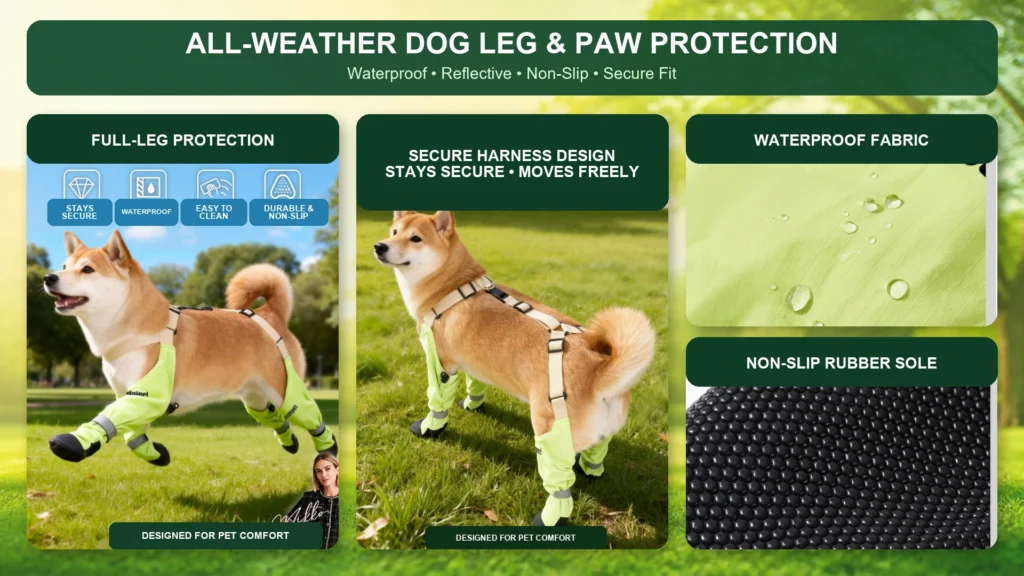
Properly fitted waterproof dog boots should stay in position without squeezing the legs. ANZELAE protectors use an integrated harness, adjustable straps, hook-and-loop fasteners and drawstring cuffs. This connected design helps distribute support across the body instead of relying only on pressure around each ankle.
5. Visible Reflective Details
A reflective band can improve visibility during evening walks or low-light weather. The orange and neon-green ANZELAE protectors use one reflective band on each leg. Reflective details supplement—but never replace—a leash, supervision or a lighted safety accessory.
6. The Correct Size and Shape
For ordinary dog shoes, many size charts require the widest part of a weight-bearing paw. Place the paw on paper, gently press so the toes spread naturally, trace it and measure the widest point.
The ANZELAE integrated design uses body-loop length as its main measurement. This is because all four protectors connect to a harness. Measure your dog while standing and follow the product-specific chart rather than choosing by breed or weight alone.
7. Easy Cleaning and Drying
An outdoor dog supply item will be used more often when it is easy to maintain. Rinse off mud, hand wash with mild soap when needed and air-dry completely. Avoid bleach, harsh chemicals, tumble drying and direct heat unless the product instructions specifically allow them.
8. A Design Suited to Real Conditions
The best waterproof dog boots are the ones that fit your dog and match the actual outing. A short neighborhood walk, a snowy road, a campground and a muddy trail create different demands. Consider weather, surface, duration, activity level and access to cleaning supplies.
How to Help Your Dog Accept Dog Shoes
Many dogs initially lift their feet, freeze or walk awkwardly in new dog shoes. This response is common because the sensation is unfamiliar.
Use a gradual introduction:
- Let your dog sniff the protectors and reward calm interest.
- Put on one protector for a few seconds, then remove it.
- Add the remaining protectors during short indoor sessions.
- Encourage a few steps on a non-slip floor.
- Increase wearing time gradually while using praise and treats.
- Take a short outdoor test walk before a longer adventure.
The American Kennel Club recommends short indoor practice sessions. Never force the equipment onto a frightened or struggling dog.
Seasonal Paw-Care Tips
Rain and Mud
Use waterproof dog boots or full-leg gaiters to reduce direct contact with puddles, mud and wet grass. After the walk, remove the gear, wipe the paws and dry between the toes.
Snow, Ice and Road Salt
Cornell University College of Veterinary Medicine advises cleaning paws after winter walks to remove snow, salt and deicing products. Inspect for trapped ice, irritation and dampness.
Warm Weather
Do not treat dog shoes as permission to walk across dangerously hot pavement. Choose cooler times of day, test the surface and shorten the outing when conditions are uncomfortable. Remove the protectors during rest breaks so you can check paw temperature and moisture.
Build a Practical Outdoor Dog Supply Kit
A useful outdoor dog supply kit should support the entire trip, not only the paws. Consider packing:
- ANZELAE full-leg protectors
- A leash and reflective light
- Fresh water and an ANZELAE portable dog water dispenser
- Waste bags and pet-safe wipes
- A clean towel
- A basic pet first-aid kit
- Spare fasteners or a storage bag
- Dog paw balm approved for your dog
Keep the kit near your walking gear or vehicle so it is easy to check before hiking, camping, road trips or rainy-day walks. Clean and dry reusable items before storing them.
Frequently Asked Questions
Are dog socks the same as boots?
No. Dog socks are generally softer and better suited to indoor traction or light protection. They usually lack the waterproof material, secure upper coverage and durable sole needed for wet outdoor use.
Can I use dog paw balm instead of boots?
It depends on the conditions. Dog paw balm can help with dry pads and create a light barrier. But it cannot protect like a textured sole and full-leg gaiter can.
How tight should dog shoes be?
They should stay secure without causing pressure, swelling or restricted movement. Check the size chart, fasten each closure evenly and inspect the paws after a short test walk.
How long can a dog wear waterproof dog boots?
No universal time exists for every dog and product. Use them for the outing, check frequently and remove them indoors or whenever moisture, rubbing, overheating or discomfort appears.
Why do dog boots twist or fall off?
Common reasons include choosing the wrong size. You may tighten the item unevenly.
There may be extra fur around the opening. The design may not fit the dog’s leg and paw. A connected harness system can provide additional stability.
Can I use waterproof dog boots after surgery?
Only with veterinary approval. Post-surgical protection depends on the wound, bandage, circulation and recovery plan. Never use ordinary outdoor gear as a substitute for prescribed medical protection.
Choose Protection That Fits Your Dog
Good paw protection is not about choosing the most fashionable dog shoes. Matching coverage, grip, fit, and materials to your dog and the environment is key.
The ANZELAE waterproof dog leg protectors include four full-leg gaiters and textured, anti-slip soles.
They also have adjustable closures, one reflective band per leg, and an integrated harness. We designed these waterproof dog boots for rain, snow, mud, wet grass, camping, and everyday outdoor walks.
Add these items to your outdoor dog supply checklist. Introduce them gradually. Inspect your dog’s paws after every adventure. A comfortable fit and attentive supervision will always matter more than any single feature.