
How to Clean a Cat Bed: 8 Steps for Fur and Odor
Learning how to clean a cat bed starts with one rule: follow the care label. Cat beds differ in fabric, filling and structure, so one cleaning method cannot suit every design.
The steps below help you handle loose fur, crumbs, odors and zippered sections without assuming that every bed is machine washable. They also explain why some cats avoid freshly washed bedding.
How Often Should You Clean a Cat Bed?
The CDC’s pet-supply cleaning guidance gives weekly cleaning as a general example for pet beds and blankets, or more often when they look dirty or smell bad. The care label should still decide the method.
Adjust the schedule for shedding, spills, outdoor dirt or heavy use. Ask a veterinarian when a sick pet needs special hygiene precautions.
How to Clean a Cat Bed in 8 Safe Steps
1. Read the Care Label First
Check the permitted water temperature, cleaning method and drying instructions. Do not place the bed in a washer or dryer unless the label allows it.
2. Remove Loose Fur and Debris
Vacuum or lift loose fur, then shake crumbs from folds, corners and the lower compartment. Removing dry debris first keeps it out of wet fabric.
3. Inspect the Bed Before Washing
Check seams, edges, filling and hardware. Stop using the bed if filling is exposed or a damaged part could be pulled off.
4. Handle the Zipper Gently
A zipper does not automatically mean that every section is removable or machine washable. Separate parts only when the product instructions show that they are designed to come apart.
Never force a stuck zipper or pull the fabric around it.
5. Use the Method on the Label
Spot clean, hand wash or machine wash only as directed. Use a suitable detergent, avoid strong added fragrance and keep your cat away from cleaners and wet surfaces.
6. Remove Cleaning Residue
Follow the label’s rinsing instructions. Residue or an unfamiliar perfume may make the refreshed bed less appealing to a scent-sensitive cat.
7. Dry Every Layer Completely
Check thick edges, seams, the tunnel and areas beside the zipper. The outside can feel dry while inner layers remain damp. Wait until every section is dry.
8. Reassemble and Inspect Again
Align the sections without trapping fabric in the zipper. Confirm that the entrance stays open, the top remains stable and no seam or filling was damaged during cleaning.
How to Clean a Cat Bed With a Donut Tunnel Design
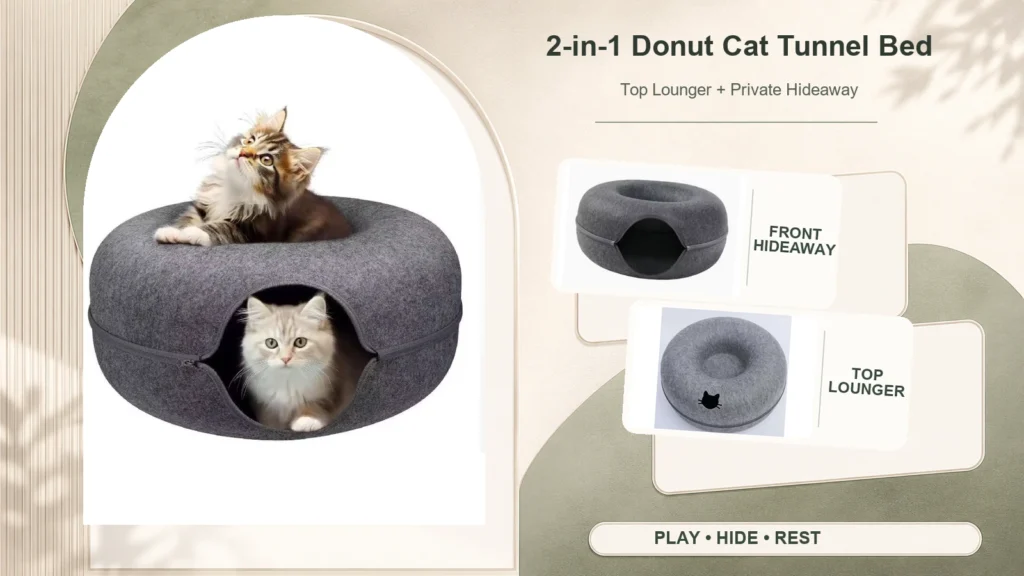
When deciding how to clean a cat bed with two levels, begin with the recessed top where fur collects. Next, inspect the covered lower area, inner wall, entrance, joining seam and zipper tape.
The ANZELAE donut cat tunnel bed is a zippered cat bed with a two-piece structure that can improve access during inspection.
Check the zipper’s intended use and care label before separating any section. The upper surface also works as an open donut cat bed.
Common Cat Bed Cleaning Questions
Can I Put a Cat Bed in the Washing Machine?
Only when the care label permits it. When learning how to clean a cat bed, do not judge washability from the outer fabric alone.
Internal panels, filling or hardware may require another method.
Why Does My Cat Avoid the Bed After Washing?
The familiar scent may have disappeared, or detergent may smell too strong.
Cats Protection advises owners not to wash every cat bed at once in its cat sleeping-spot guide. Leave another familiar resting place available while the clean bed becomes familiar again.
What If the Bed Stays Damp or Smells After Cleaning?
Keep it out of use and continue drying it as directed. Persistent odor, deterioration or suspected mold may mean replacement is safer than reuse.
How to Clean a Cat Bed Without Removing Every Familiar Scent
Rotate care when your cat uses several sleeping places instead of washing everything on the same day.
Browse our cat beds, toys and indoor accessories if you need another resting option while one bed dries.
Knowing how to clean a cat bed means balancing hygiene with correct product care. Remove debris, follow the label, handle zippers gently and dry every layer completely.