Dog Snuffle Mat Guide: 9 Essential Benefits and Safety Tips
A dog snuffle mat turns dry food and small treats into a supervised scent-searching activity. Instead of eating all kibble from a bowl, a dog uses its nose to search fabric strips, folds, pockets, cups, and other hiding spots. The result is a simple indoor activity. It adds variety to meals and needs no complex training equipment.
This dog snuffle mat guide explains how these feeding toys work. It also explains how they differ from ordinary toys.
You will learn what to look for when choosing one. You will also learn how to introduce a mat safely. It also answers common questions about feeding time, cleaning, chewing, and daily use.
What Is a Dog Snuffle Mat?
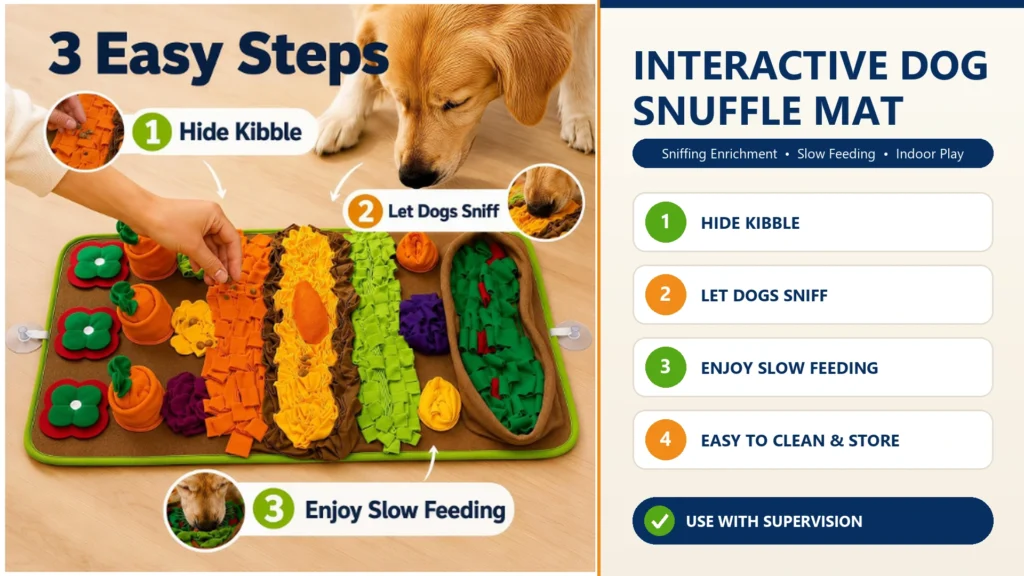
A dog snuffle mat is a fabric activity mat designed with places to hide dry kibble or small treats. The dog searches through the material by sniffing, nudging, and gently moving the fabric with its nose.
The activity builds on a behavior dogs already use naturally: searching for food through scent. The goal is not to make eating frustrating. A good session gives the dog a challenge that remains achievable and rewarding.
A typical snuffle mat for dogs may include:
- Fleece or felt strips
- Folded fabric rows
- Flower-shaped pockets
- Cups or raised hiding sections
- Flaps and layered panels
- Different difficulty zones
9 Potential Benefits of a Snuffle Mat for Dogs
1. Encourages Natural Sniffing
Sniffing is one of the main ways dogs investigate their surroundings. Hiding food in a mat gives the dog a clear reason to use its nose and search through different sections.
2. Creates a Slower Feeding Routine
When you spread kibble across folds and pockets, the dog must find each piece. It cannot take several mouthfuls from a bowl. This can create a slower, more deliberate feeding activity, although results vary between dogs.
3. Turns Food Into an Activity
A measured portion of a normal meal can become a simple puzzle. This helps owners add enrichment without adding extra calories. Count all kibble and treats in the dog’s daily food allowance.
4. Provides Indoor Enrichment
Rain, extreme temperatures, recovery periods, or busy schedules can sometimes reduce outdoor activity. A dog snuffle mat can offer a short indoor activity. It should support walks, training, social time, and exercise, not replace them.
5. Allows Adjustable Difficulty
Beginners can start with food placed visibly on top. As the dog learns the game, you can move rewards into deeper folds or more complex pockets. The same mat can therefore offer several levels of difficulty.
6. Supports Calm, Focused Engagement
Some dogs settle into a steady pattern of sniffing and searching when the activity is introduced gradually. Keep the environment quiet and avoid rushing, crowding, or repeatedly moving the mat while the dog is working.
7. Offers Variety for Different Dogs
Some dogs enjoy flat mats with simple strips, while others prefer larger designs with cups, flowers, or raised pockets. Size, age, mobility, food motivation, and play style should all influence the design you choose.
8. Can Reinforce a Search Cue
Owners can pair the activity with a consistent phrase such as “find it.” The cue should calmly signal that the dog may begin searching after you place the food.
9. Makes Supervised Play More Interactive
The owner prepares the mat, observes the search, adjusts the difficulty, and removes the product afterward. This creates a shared routine rather than leaving the dog alone with an unattended fabric toy.
Dog With Toy vs. Dog With a Snuffle Mat
Watching a dog with toy after toy may reveal that different products support different types of behavior. A ball can encourage chasing, a tug toy supports controlled play, and a chew toy offers a safe chewing outlet. A snuffle mat focuses on sniffing and food searching.
How to Choose the Best Dog Snuffle Mat
Select an Appropriate Size
The mat should offer enough usable surface area for the dog to search without the product folding underneath itself. Larger dogs may benefit from a wider layout, while a compact mat may be sufficient for a small dog or limited indoor space.
Look at the Hiding Areas
Simple strips are useful for beginners. Deep cups, tight folds, layered flowers, and closed pockets create more difficult searches. A design with several sections allows owners to change the challenge without replacing the entire mat.
Check the Materials and Construction
Inspect the stitching, fabric edges, attached shapes, and base before use. Avoid products with loose components that a child could pull off and swallow. The material should suit your dog’s normal play style and be easy to inspect after cleaning.
Consider Cleaning and Storage
Food particles and saliva can collect inside dense fabric. A washable design is more practical for repeated feeding sessions. Check the care label, use mild detergent, and dry every layer completely before storage. A mat that rolls or folds can be easier to store between sessions.
Match the Product to Your Dog
A snuffle mat for dogs is not automatically suitable for every pet. Persistent fabric chewers, dogs that swallow non-food objects, or intensely frustrated dogs may need a different enrichment activity. Dogs with dietary restrictions or food-guarding behavior may also require professional guidance.
How to Introduce a Dog Snuffle Mat in 5 Steps
Step 1: Let Your Dog Inspect the Mat
Place the empty mat flat on the floor. Allow calm investigation, then remove it before the dog begins chewing or pulling at the material.
Step 2: Make the First Search Easy
Sprinkle a small amount of dry kibble or several small treats visibly on top. Avoid pushing food into the deepest pockets during the first session.
Step 3: Add a Consistent Cue
Ask the dog to wait while you prepare the mat. Use a phrase such as “find it” to begin the search. Keep your voice and movements relaxed.
Step 4: Supervise Closely
Watch the dog throughout the session. Redirect chewing, pawing that damages the fabric, tugging, or attempts to carry the entire mat away. Separate multiple dogs if food competition could occur.
Step 5: Remove and Inspect the Mat
Pick up the mat when the food is gone. Shake out crumbs, check the seams and attached pieces, and clean it when necessary. Store it out of reach so it remains a special supervised activity rather than an everyday chew item.
The American Kennel Club’s guide to snuffle mats also recommends supervising dogs. It also advises putting the mat away after use. The ASPCA’s canine enrichment guidance also emphasizes active supervision around enrichment items.
How Long Should a Dog Use a Snuffle Mat?
No universal session length suits every dog. Begin with a short, successful search and observe the dog’s behavior. End the activity if the dog loses interest, becomes frustrated, starts chewing, or has already found all the food.
Difficulty matters more than simply extending the time. If a session finishes too quickly, hide food in a few deeper areas next time. If the dog struggles, make more pieces visible and reduce the number of difficult pockets.
What Food Can Go in a Snuffle Mat?
Dry, appropriately sized food is generally the easiest option. Common choices include:
- Part of the dog’s measured kibble meal
- Small dry training treats
- Air-dried or freeze-dried pieces suitable for the dog
Avoid sticky, oily, or wet foods.
Only use them if the instructions allow it.
Wash the mat right after. Always account for treats within the dog’s normal daily food intake.
How to Clean a Snuffle Mat
Shake the mat outdoors or over a bin to remove crumbs. Follow the manufacturer’s washing instructions; some designs are machine washable, while others require hand washing. Use mild detergent and avoid harsh chemicals.
Air drying is usually the safest option for layered felt-style products. Check deep pockets and thick folds before storing the mat because the outer surface may feel dry while inner layers remain damp.
Frequently Asked Questions
Are Snuffle Mats Good for Dogs?
They can provide supervised sniffing and food-searching enrichment for dogs whose size, temperament, and play style suit the product. They are not appropriate for every dog, especially persistent fabric chewers or dogs that swallow toy components.
Can Dogs Use a Snuffle Mat Every Day?
Some dogs can use one regularly as part of a varied routine. Continue monitoring food quantity, cleanliness, product condition, and the dog’s behavior. Daily use is not necessary, and the mat should not replace other forms of enrichment or exercise.
Is a Snuffle Mat for Dogs a Slow Feeder?
It can function as a search-based feeding tool by spreading food across many hiding areas. However, it differs from a rigid slow-feeder bowl. The effect depends on the design and the dog.
Can I Leave My Dog Alone With a Snuffle Mat?
No. Fabric strips and attached pieces can become damaged or swallowed. Supervise the complete session and store the mat out of reach afterward.
What If My Dog Tries to Chew the Mat?
Interrupt the activity and remove the product. Do not continue adding food while the dog is chewing fabric. Consider a more durable, purpose-designed enrichment product that better matches the dog’s play style.
Can a Snuffle Mat Replace a Walk?
No. Nose work adds helpful mental variety. But dogs still need physical exercise, time outdoors, training, social time, and rest.
Which Design Should I Choose?
Choose according to usable floor space, dog size, experience level, cleaning needs, and play style. The ANZELAE interactive dog snuffle mat is available in several pictured layouts.
You can also browse more dog accessories.
Final Thoughts
A dog snuffle mat can turn a measured portion of dry food into a more engaging supervised search. The best results come from choosing the right design.
Use a snuffle mat for dogs as one part of a balanced enrichment routine—not as a chew toy or replacement for exercise. When the activity is safe, achievable, and well supervised, dogs can enjoy using their natural sense of smell.