
Dog Harness Size Guide: How to Measure, Fit and Choose One for Small Dogs
A dog harness can look perfect in a product photo and still fit the wrong way on a real dog. A strap may sit too close to the front legs, the neck opening may slide over the head, or the body panel may rotate during a walk.
That is why this guide starts with a measuring tape rather than a list of fashionable features. You will learn how to measure your dog, read a dog harness size chart, complete a quick indoor fit test and decide whether reflective trim or removable spike panels suit your normal walking routine. A reliable dog harness size guide must connect the numbers to the way the animal actually moves.
If you already know your dog’s measurements, you can compare them with our adjustable spiked dog harness or browse more dog walking gear.
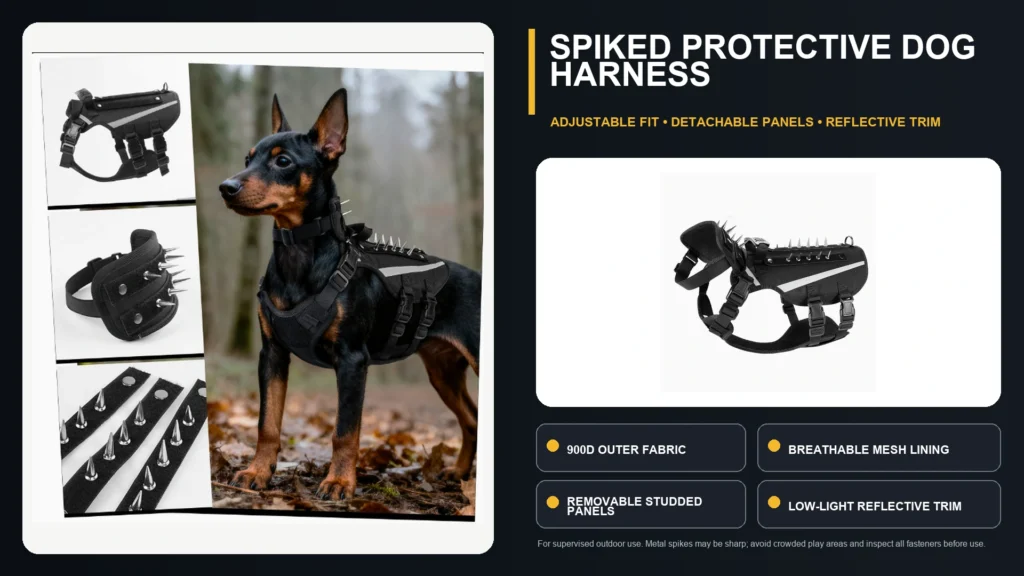
Start With a Tape Measure, Not a Breed Name
Two dogs of the same breed and weight can have very different proportions. One may have a deep chest and narrow neck, while another may have a shorter back and broader shoulders. A dog harness for small dogs should therefore be selected from measurements, not breed expectations.
The American Kennel Club’s dog measuring guide recommends using actual neck and chest measurements when choosing wearable gear. Weight can help confirm the result, but it should not replace the product-specific measurements.
Ask your dog to stand naturally on a level floor. Use a soft measuring tape and keep it flat against the coat without pulling it tight. If your dog has a thick coat, measure through the coat as it normally sits.
Measure the Chest Girth
Wrap the tape around the widest part of the rib cage, usually just behind the front legs. Keep the tape level around the body and record the number in centimeters.
Chest girth is often the most useful measurement for an adjustable dog harness. A size that is too small may pinch or limit movement. A size that is too large may twist or become easier to back out of.
Measure the Neck Opening and Neck Girth
This product lists both neck opening and neck girth. Measure around the lower neck where the harness will sit, not high under the jaw like a standard collar.
Check that the opening can pass into position without scraping the ears or forcing the dog’s head. Once fitted, the neck section should remain away from the throat and should not slide over the head when you apply gentle backward pressure.
Check Back and Belly-Panel Length
Back length helps you judge where the body panel will end. Belly-panel length helps you predict where the lower section and straps will sit beneath the dog.
These measurements matter when selecting a dog harness for small dogs with compact, long or deep-chested builds. The straps should stay clear of the elbows and allow the front legs to extend naturally.
Use the Dog Harness Size Chart as a Range
The ANZELAE spiked dog harness is available in XS, S and M. Compare every measurement rather than choosing from weight alone.
| Size | Neck Opening | Chest Girth | Neck Girth | Back Length | Belly Panel | Product Weight | Suggested Dog Weight |
|---|---|---|---|---|---|---|---|
| XS | 31–38 cm | 48–56 cm | 35–42 cm | 25 cm | 30 cm | 420 g | 4–9 kg / 9–20 lb |
| S | 34–42 cm | 51–69 cm | 38–51 cm | 28 cm | 33 cm | 460 g | 7–18 kg / 15–40 lb |
| M | 41–52 cm | 54–81 cm | 44–62 cm | 32 cm | 36 cm | 480 g | 16–30 kg / 35–66 lb |
If your dog sits between two sizes, compare the chest, neck and body lengths together. Choose the size that places the dog near the middle of the useful adjustment range whenever possible.
Do not size down simply to create a tighter fit. Do not size up if the neck opening could pass over the head. When no size matches all the important measurements, another dog harness shape may be more appropriate.
Perform This 60-Second Fit Test Indoors
Do not make the first test on a busy pavement or trail. Fit the harness indoors, attach the leash and complete four simple checks.
The Finger Check
The harness should feel close to the body without pinching. The AKC fitting guidance explains that you should be able to squeeze two fingers beneath the straps without making the fit uncomfortably tight.
Check several positions rather than testing only one strap. Long hair can hide a loose fit, so feel where the webbing touches the body.
The Movement Check
Ask the dog to walk, sit, turn and step over a low object. Watch the shoulders and front legs. The straps should not cut into the armpits, shorten the stride or make the dog lift an elbow unusually.
A small dog harness must fit the animal’s proportions, not merely carry a Small or XS label. This matters even more when a small dog harness has structured panels or additional hardware. Reposition or readjust it if the body panel tilts to one side.
The Back-Out Check
Hold the leash securely and apply light pressure in different directions while the dog remains calm. Then gently simulate the dog stepping backward.
Stop if the neck opening begins to move over the skull or the body slips through a loop. Tighten the adjustable dog harness and repeat the test. If it still shifts, choose another size or shape.
The Friction Check
Run your fingers beneath the edges near the lower neck, shoulders, elbows and belly. Look again after a short indoor walk.
Redness, trapped fur, repeated scratching or a changed gait can signal a fit problem. Remove the harness and correct the cause before going outside.
Choose Features Only After the Fit Works
Fit decides whether the equipment can be used comfortably. Materials and accessories decide where it makes sense to use it.
900D Water-Resistant Outer Fabric
The black body uses structured 900D outer fabric designed to resist ordinary splashes and light rain. Water-resistant does not mean waterproof, and the dog harness should not remain wet after a walk.
Wipe away mud, follow the care instructions and let every layer dry completely before storage. Inspect stitching and strap openings whenever you clean it.
Breathable Mesh Lining
The inner mesh creates a softer contact surface and helps air move through the covered area. A breathable dog harness can still feel warm during hot weather, especially because this design covers more of the back and belly than a minimal strap harness.
Choose cooler walking times, offer water and remove the harness after the outing. Stop if the dog appears uncomfortable or overheated.
Low-Light Reflective Trim
The silver trim reflects light when illuminated, which can make the dog easier to notice during early-morning or evening walks. This gives the reflective dog harness a practical role beyond appearance.
Reflective material does not create its own light. The RSPCA’s dark-weather walking advice recommends reflective or LED equipment for both the dog and handler, together with well-lit routes.
Treat a reflective dog harness as one visibility layer. Continue using a leash, stay attentive near traffic and carry a light when the route is very dark.
Detachable Metal Spike Panels
The spiked dog harness includes removable studded panels along the neck and back. They create a bold appearance and can be detached when the setting calls for a simpler surface.
Metal points may be sharp. Remove the panels before close-contact play, dog-park visits, travel, crating, crowded indoor use or contact with young children. Inspect each fastener before every use.
Spiked Style Is Not a Protection Guarantee
Some shoppers use the phrase protective dog harness when searching for equipment with raised studs or extra body coverage. That description must not be confused with certified protective equipment.
A spiked dog harness cannot guarantee protection from bites, wildlife or attacks. Do not approach unfamiliar animals because your dog is wearing one. Create distance, keep the leash under control and leave any situation that feels unsafe.
The removable design offers a more sensible choice than wearing the spike panels everywhere. Use them only during supervised outings where the points will not contact people, pets, furniture or vehicle interiors.
Rehearse the First Walk Before Opening the Door
Place the adjustable dog harness on the floor and let your dog investigate it. Reward calm interest. If the dog dislikes equipment passing over its head, work in short stages instead of forcing the opening into place.
Fasten and remove it several times indoors. Then attach the leash to the rear D-ring and walk around the room. This product is a back-clip design; the images do not show a front leash attachment.
Start the first outdoor trial on a short, familiar route. After a few minutes, stop in a safe place and check the straps, shoulder clearance and panel position again. Recheck the fit after grooming, coat changes, growth or noticeable weight changes.
The VCA guidance on harnesses also stresses free shoulder movement, prevention of chafing and a fit that does not allow the dog to reverse out of the equipment.
A Pre-Walk Check You Can Repeat Every Time
Before leaving home, ask five quick questions:
- Are the neck and chest straps adjusted evenly?
- Are all buckles completely closed?
- Are the leash ring, stitching and webbing undamaged?
- Are removable spike panels firmly attached or safely removed?
- Can the dog walk, sit and turn without rubbing or restriction?
This routine takes less time than correcting a problem outside. Replace the dog harness if any buckle, strap, ring or attachment is damaged.
Common Dog Harness Questions
Is This a No-Pull Dog Harness?
It should not be marketed as a no-pull dog harness. The product images show a rear leash ring and do not show a verified front-clip or tightening system. Loose-leash walking still requires consistent, reward-based training.
Is a Harness Better Than a Collar for Every Dog?
No single design is best for every dog. A properly fitted harness distributes contact across more of the body, but shape, behavior, health and walking style still matter. Ask a veterinarian or qualified trainer when your dog has respiratory, orthopedic or handling concerns.
What Should I Check in a Small Dog Harness?
Compare chest and neck measurements, total product weight, hardware size and shoulder clearance. A dog harness for small dogs should stay stable without adding unnecessary bulk or pulling the animal off balance.
Can My Dog Wear the Harness All Day?
Use it for supervised walking rather than continuous wear. Remove it during rest, unsupervised time, close play and crating. This reduces rubbing and prevents the equipment from catching on household objects.
Is Reflective Trim Enough for a Night Walk?
No. A reflective dog harness needs an outside light source before it can return light. Combine it with a well-lit route, a short controlled leash, visible clothing for the handler and an active light when needed.
How Often Should I Check the Size?
Check before every walk and measure again after growth, grooming or weight changes. Puppies need especially frequent checks because their proportions can change quickly.
Which Size Should I Buy If Only the Weight Matches?
Measure again and follow the chest and neck ranges first. Weight is only a secondary guide. If your dog’s measurements fall outside the same row, contact the seller or choose another design.
Measure First and Walk With More Confidence
The strongest buying decision begins with accurate measurements and an honest indoor fit test. Use this dog harness size guide again after grooming, growth or weight changes. After that, you can compare construction, reflective details and removable styling without guessing whether the basic shape works for your dog.
Choose the ANZELAE adjustable spiked dog harness if its XS–M measurement ranges suit your dog and the removable panels fit your intended setting. You can also explore more dog harnesses and outdoor dog supplies for different builds and activities.