
Dog Boots for Rain and Snow: Does Your Dog Need Them?
Dog boots help when the ground creates a problem. Some dogs cross wet grass easily; others struggle with slush, road salt, gravel or mud. Use this quick check before a walk.
Check the Surface Before You Leave
Rain and Mud
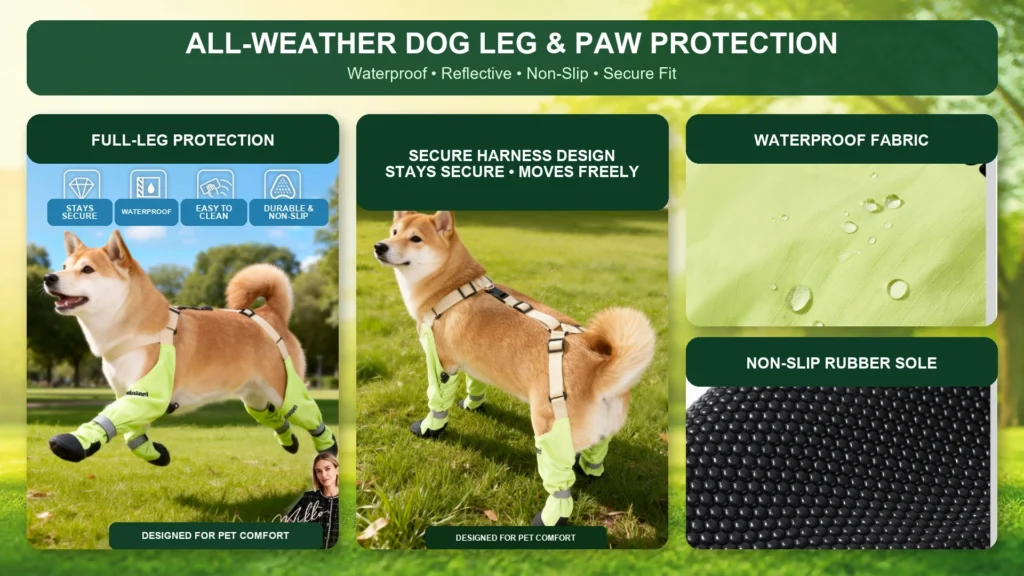
Choose dog boots for rain when soaked legs or slick paths cause trouble. Full-leg cover paws and lower legs ,Textured soles may improve grip.
Snow, Ice and Road Salt
Dog boots for snow add a barrier against slush, ice and deicer. Cornell’s winter safety guidance recommends cleaning paws after winter walks. Remove the gear indoors and wipe away salt.
Hot or Rough Ground
Dog paw protection may help on gravel, but cannot make hot pavement safe. Choose cooler hours and shade. Turn back if your dog lifts a paw or avoids the ground.
Run a 30-Second Fit Check
Measure your standing dog and use the size chart, not breed alone. The four gaiters should stay secure without squeezing, twisting or changing the stride. An integrated harness and adjustable closures help align the set.
Let your dog inspect the gear. Add one piece indoors, reward calm behavior and build up to all four. The AKC dog boot fitting guide recommends gradual practice. Stop for rubbing, limping, slipping or an unusual gait.
Do All Dogs Need Boots?
No. Healthy paws on mild, clean ground may need no coverage. Use dog boots for wet legs, salt, sensitive paws or poor traction, then remove them indoors.
What Should You Do After the Walk?
Rinse off dirt, dry the protectors and inspect every paw. Find more essentials in our dog supplies collection. Combine a safer route, comfortable fit and quick post-walk check.