
Pet Sling Carrier Guide: 9 Essential Tips for Small Pets
This pet sling carrier guide explains how to choose comfortable, practical carrying gear for a small dog or cat. A well-fitted pet sling carrier keeps a small pet close to your body. It leaves your hands free for short walks, shopping, and daily errands.
However, some pets need enclosed cat carriers, a structured dog carrier backpack, or other dog carriers and travel gear. Weight, body shape, temperament, trip length and escape risk should guide the decision.
Use these nine tips to compare carrier styles. Review safety features and decide if the ANZELAE hands-free sling suits your pet.
What Is a Pet Sling Carrier?
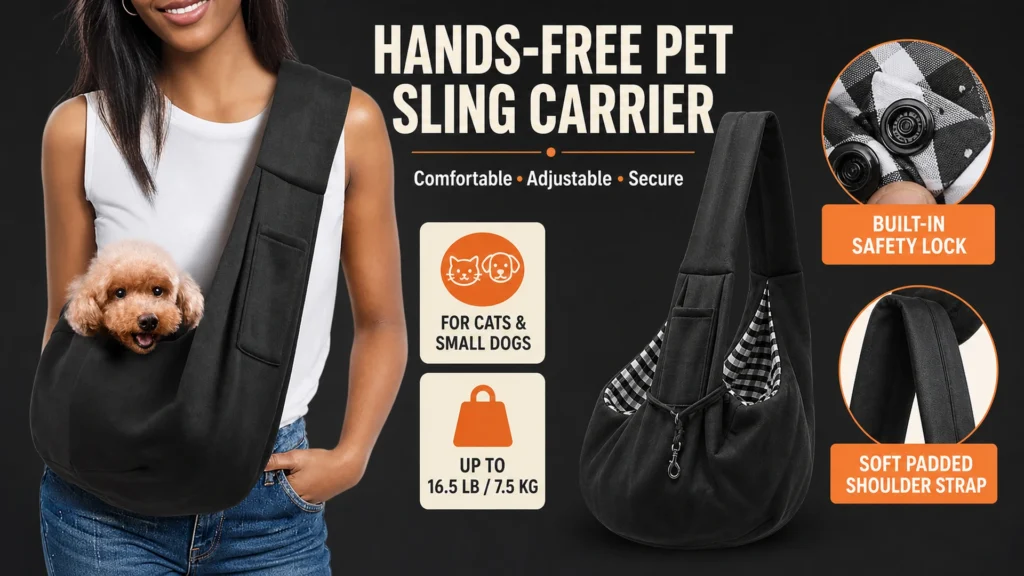
In this pet sling carrier guide, a pet sling carrier is a soft, crossbody pouch worn over one shoulder. The pet rests inside the pouch near the wearer’s hip or torso. Unlike a rigid crate, the sling fits the body more closely.
It suits lightweight pets and shorter outings.
Pet Sling Carrier Guide
Different carrier formats solve different problems. Use the expected activity to narrow the choice.
The American Kennel Club’s carrier guide suggests thinking about your planned activity before choosing a carrier.
It also recommends checking the maker’s size and weight limits.
Check any airline requirements too.
This pet sling carrier guide compares each format by intended use.
9 Essential Tips in This Pet Sling Carrier Guide
1. Start With the Activity
Begin by deciding where and how the carrier will be used. A pet sling carrier may be convenient for a brief walk, a quiet store or carrying a small pet through a crowded area. A dog carrier backpack can spread weight more evenly on long walks. Enclosed cat carriers are usually better when full containment matters.
2. Weigh and Measure Your Pet
Never choose solely by breed. Two dogs of the same breed can have different chest widths, body lengths and weights.
Check:
- Current body weight
- Body length and chest width
- Whether the pet can rest without being compressed
- Whether the head and airway remain unobstructed
- Whether the pet repeatedly leans or climbs toward the opening
3. Inspect the Safety Tether and Closures
A built-in tether can help limit unwanted movement, but it must be used correctly. Clip it to a properly fitted harness rather than directly to a collar. Attaching a tether to a collar can place pressure on the neck if the pet suddenly jumps.
4. Keep the Airway and Face Unobstructed
Your pet’s nose and mouth must remain open to fresh air. Fabric, straps and drawstrings should never tighten around the neck or cover the face.
Stop the outing if you notice unusual panting, struggling, repeated escape attempts, weakness or distress. Warm conditions can make any wearable carrier uncomfortable, even when the opening appears wide.
5. Look for a Wide Padded Shoulder Strap
A narrow strap can concentrate pressure on one area of the shoulder. A wider padded strap spreads the load across a broader surface.
The ANZELAE design has an approximately 12 cm / 4.7 in padded shoulder section. Alternate shoulders, keep outings short at first and take breaks when needed. Evaluate comfort for both the pet and the person carrying it.
6. Consider Adjustability and Balance
The pouch should sit close enough to your body to reduce swinging without compressing the pet. Adjust the empty carrier first, then place the pet inside while seated or near the floor.
The ANZELAE sling uses a drawstring to adjust the pouch position. After adjustment, walk a few steps indoors and confirm that the carrier remains balanced. Compatibility between the pet and the carrier matters more than how the product looks in a photograph.
7. Choose the Right Level of Containment
Cats and nervous dogs may climb, twist or jump when startled. Search phrases like “cat carrier cat” often show owners want a compact option.
But the key question is whether the cat can ride comfortably inside.
Traditional enclosed cat carriers usually provide more escape protection than an open sling. If your cat is highly active, fearful or difficult to handle, choose a securely enclosed carrier instead.
8. Check Storage and Cleaning Features
An exterior pocket can hold lightweight items such as waste bags, treats or identification cards. Avoid sharp or heavy objects that could affect balance or press against the pet.
Choose a carrier you can clean and dry completely. Remove hair and debris after each outing, follow the care label and inspect the seams and hardware during cleaning.
9. Introduce the Carrier Gradually
Do not make the first use a long or stressful trip. Place the carrier in a familiar room, let the pet investigate it and reward calm interaction.
Cat Friendly Homes recommends leaving a cat’s carrier in a familiar spot. Use bedding, treats, or toys to create a positive association. The same gradual approach can help a small dog accept a sling or backpack-style carrier.
How to Help a Cat Accept a Carrier
This pet sling carrier guide also applies to calm cats, although many cats prefer a more enclosed design.
Many cats prefer predictable, enclosed spaces. Leave cat carriers accessible at home instead of bringing them out only for vet visits. Add familiar bedding and occasionally place treats nearby or inside.
For a sling, begin close to the floor and keep one hand on the pouch. Do not use an open sling for a cat that pushes upward, panics or repeatedly attempts to escape. In those cases, enclosed cat carriers are the safer practical choice.
When Is a Backpack Carrier Better?
A complete pet sling carrier guide should explain when a different carrying format is more appropriate.
A dog carrier backpack may be more suitable when:
- The walk is longer
- You want weight distributed across two shoulders
- The route includes stairs or uneven ground
- The pet needs a more structured position
- You need additional storage
- A single-shoulder sling becomes uncomfortable
Backpacks still require correct sizing, ventilation and supervision. Never use an ordinary human backpack as a substitute for purpose-built pet equipment.
Build a Small-Pet Outing Kit
A useful pet sling carrier guide should cover the supplies carried alongside the pet as well as the carrier itself.
A practical set of dog carriers and travel gear may include:
- A correctly fitted sling, tote or dog carrier backpack
- A pet harness and leash
- Identification tags
- Waste bags and wipes
- A lightweight towel
- Fresh water and an ANZELAE portable dog water dispenser
- Basic pet first-aid supplies
Match the equipment to the trip. A short shopping visit and a long road journey require different preparation.
Pet Sling Carrier Guide FAQs
Is a pet sling carrier safe for dogs?
A pet sling carrier can work for a calm, small dog if it fits well. Attach the tether to a harness. Keep the dog supervised. Not every temperament or activity is appropriate.
Can cats use pet sling carriers?
Some calm cats may tolerate a sling after gradual training. Cats that are likely to escape do best in enclosed carriers.
Choose one with a secure door and good ventilation.
Is a sling better than a dog carrier backpack?
It depends on the outing. A sling provides close contact and quick access during shorter trips. A dog carrier backpack distributes weight across two shoulders and may suit longer walks better.
Should the safety tether attach to a collar?
No. Attach it to a properly fitted harness to avoid placing sudden pressure on the neck.
Can I use this sling in a car?
Do not use a fabric sling as a vehicle restraint. The AVMA’s pet travel guidance recommends confining cats in an appropriate cage or carrier during vehicle travel. Use a travel product designed and secured for the vehicle.
How should I clean a canine bag?
Follow the care label. Remove loose hair, spot clean or hand wash when permitted and air-dry completely. Inspect the tether, closures and stitching before reuse.
Choose the Carrier That Fits the Trip
The best carrier is not determined by the most popular search term. The pet’s size and temperament, the trip, and the required level of containment determine it.
Use this pet sling carrier guide to compare cat carriers, a canine bag, and a dog carrier backpack.
Compare them before you buy. For short, supervised outings with a calm small pet, the ANZELAE pet sling carrier offers a wide padded strap. It has an adjustable pouch, a safety tether, and a handy outer pocket.
Introduce any new carrier slowly. Check it before you use it. Keep your pet’s comfort and safety first on every outing.