
Portable Dog Water Dispenser Guide: Fresh Water on the Go
Camping, hiking, beach trips, and road trips are easier when your dog has fresh water. A portable dog water dispenser combines a water reservoir and a drinking bowl. You do not need to carry them separately.
Dogs should always have access to clean water. Their needs vary with size, activity, weather, diet, and health. Planning hydration before leaving home is especially important for active dogs.
Why Dogs Need Water Outdoors
Exercise, heat, and excitement can increase your dog’s water needs. Dogs typically drink about 40–60 mL of water per kilogram of body weight daily, though individual needs vary. Discuss sudden changes in drinking with a veterinarian.
Do not rely on lakes, rivers, puddles, or public bowls. The CDC recommends bringing water for pets, especially where harmful algal blooms may occur. A portable dog water dispenser helps you control water quality.
What Is a Portable Dog Water Dispenser?
A portable dog water dispenser stores freFlushes water and dispenses it directly into an integrated bowl. Carrying it is more convenient than carrying a separate container. bottle and bowl, especially when walking a dog.
The ANZELAE 77 oz model holds 2200 mL of water and includes an 8.8 oz (250 mL) pull-out dog water bowl. A top button releases water, while capacity markers, a handle, strap, and carabiner make it easy to carry.
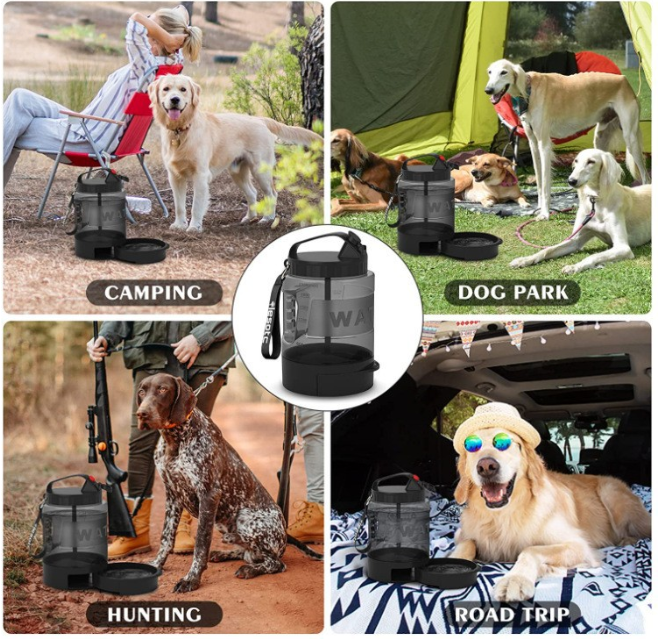
For outdoor activities, a portable dog water dispenser is more convenient because the water and bowl stay together.
Seven Features to Consider
1. Suitable Capacity
Choose a size based on your dog’s weight, activity, weather, number of dogs, and access to refill points. The ANZELAE dispenser holds 77 oz (2200 mL), making it suitable for longer outings and larger dogs.
2. Integrated Bowl
A wide dog water bowl is more comfortable than a narrow bottle opening. The ANZELAE bowl holds 8.8 oz (250 mL) and slides into the base when not in use.
3. Easy Water Control
A push button allows one-handed operation and helps reduce waste. Practice using the dispenser at home so your dog can become familiar with it.
4. Leak Resistance
Look for a secure lid and silicone seal. Test the filled dispenser over a sink before placing it in a bag or vehicle.
5. Safe Materials
Choose BPA-free, non-toxic materials made for drinking water. Replace the dispenser if it develops cracks, deep scratches, or damaged seals.
6. Carrying Options
A handle works well for short walks, while a strap is useful for longer trips. A full 77 oz dispenser is heavy, so plan how you will carry it.
7. Easy Cleaning
Rinse the bowl and reservoir after use. Wash them with mild soap, rinse thoroughly, and let them dry completely before storage.
Why Choose a 77 oz Dispenser?
A 77 oz reservoir can be useful for:
- Medium and large dogs
- Two dogs sharing water
- Camping and day trips
- Long hikes
- Warm-weather outings
- Beaches and dog parks
- Hunting and field activities
- Road trips
The goal is not for your dog to drink the whole reservoir.
Having enough water for the planned activity and any unexpected delays is essential.
How to Use the ANZELAE Dispenser
- Rinse the reservoir and dog water bowl.
- Fill the reservoir with fresh water.
- Check the lid and silicone seal.
- Carry it by the handle or strap.
- Pull out the bowl.
- Press the button to release water.
- Let your dog drink at a comfortable pace.
- Wipe or empty the bowl, then store it.
PetMD recommends bringing water and a travel bottle or bowl on trips. Offer water during planned breaks instead of waiting for obvious signs of thirst.
Safer Water Outdoors
Natural water is not always safe. The CDC warns that harmful algal blooms can make pets seriously ill. The American Kennel Club also recommends bringing fresh water instead of relying on lakes, rivers, or ocean water.
Use a portable dog water dispenser along with shade, rest breaks, supervision, and local water-safety warnings. Contact a veterinarian if your dog becomes ill after drinking outdoor water.
Common Mistakes
Waiting Too Long to Offer Water
Give water during regular breaks, especially in hot weather or during intense activity.
Bringing a Bowl Without Water
A collapsible dog water bowl is useful only when safe water is available. In remote areas, carry both water and a bowl.
Using New Gear Without Practice
Introduce the dispenser at home before taking it on a long trip.
Storing It While Damp
Wash, rinse, and air-dry all parts before storage to prevent odors and buildup.
Frequently Asked Questions
How much water should a dog drink?
Dogs commonly drink about 40–60 mL per kilogram of body weight daily, but needs vary. Ask a veterinarian about unusual changes.
Is a portable dispenser better than a dog water bowl?
A standalone dog water bowl is lighter but does not store water. A portable dog water dispenser stores and dispenses water, so it works better when refill points are limited.
Can it replace a pet water fountain?
No. A pet water fountain is made for stationary home use. A travel dispenser carries a limited water supply outdoors. Many owners use both.
Is a dog water fountain suitable for camping?
Most home fountains need electricity and are not practical for trails or remote campsites. A sealed travel dispenser is easier to transport.
Can dogs drink from lakes and streams?
Fresh water is safer. Avoid water that looks or smells unusual, and follow local warnings about harmful algae.
How should I clean the dispenser?
Wash the reservoir and bowl with mild soap and clean water. Rinse and dry all parts completely before storage.
Fresh Water for Every Adventure
The ANZELAE portable dog water dispenser has a 77 oz reservoir and an 8.8 oz pull-out bowl.
It includes a push-button release and clear capacity markers.
It also has a handle, strap, and carabiner. It keeps fresh water accessible for medium and large dogs.
Whether you are visiting a park, beach, campground, or trail, bring water ahead of time. It keep your dog safe and comfortable.