7-Day Dog Enrichment Plan: Indoor Activities for Dogs With a Snuffle Mat
Rainy weather can shorten a walk, but it does not have to turn the rest of the day into hours of boredom. The most useful dog toys give your dog something clear to do: sniff, search, solve, find and finish.
This seven-day dog enrichment plan uses a dog snuffle mat as the main activity and adds a few simple scent and training games. It helps owners build a repeatable routine instead of buying more dog toys and leaving every item on the floor.
Before Day One: Set Three Simple Rules
The plan works best when food, difficulty and supervision stay consistent. A safe dog enrichment routine begins with these three points before the mat reaches the floor.
Use a Measured Food Budget
Choose small pieces of dry food. Part of your dog’s usual kibble is often the easiest option because you can subtract it from the normal meal instead of adding unknown calories.
Dogs Trust enrichment guidance recommends including food used in enrichment within the dog’s daily allowance. Measure the complete daily amount first, then decide how much will go into the bowl, training pouch and dog enrichment toys.
Do not keep adding treats simply because the search ends quickly. Make the hiding pattern more interesting before increasing the food quantity.
Supervise From Start to Finish
A snuffle mat for dogs is a food-search activity, not a fabric chew toy. Stay close enough to stop the session if your dog starts pulling out strips, tearing seams or trying to swallow material.
The American Kennel Club’s snuffle-mat guidance recommends supervising use, putting the mat away afterward and monitoring dogs that have a history of chewing or swallowing objects.
Record a Starting Point
On the first day, note how long your dog stays interested and how it approaches the mat. Does it sniff carefully, paw at the fabric, flip the mat or look to you for help?
This is not a performance test. The notes simply help you select indoor activities for dogs that match the animal in front of you.
Day 1: Make the First Search Easy
Place the dog snuffle mat on a clean, stable floor. Scatter a small amount of kibble across the top, where every piece remains easy to see and smell.
Give a simple cue such as “Find it,” then let the dog investigate. Avoid pointing to every piece. The goal is to help your dog understand that sniffing makes food appear.
End the activity while it is still going well. Pick up the mat as soon as the food is gone, especially if the dog begins mouthing the fabric.
An easy first session builds more useful confidence than a difficult puzzle that causes frustration. This rule applies to dog puzzle toys as well as fabric mats.
Day 2: Turn Part of Breakfast Into a Search
Measure the dog’s normal breakfast. Put a small portion in the snuffle mat and serve the remaining food as usual.
Hide most pieces beneath only the first layer of fabric. Leave several visible so the dog receives quick feedback and keeps searching.
A mat can work as a slow feeder for dogs because each piece takes longer to locate than food in an open bowl. It should not be advertised as a way to prevent bloat, choking or other medical problems.
VCA Animal Hospitals includes food-puzzle toys among the options that can add steps to eating. If your dog suddenly develops a major change in appetite or eating behavior, contact your veterinarian rather than relying on a feeding toy.
Day 3: Add One New Hiding Level
Today, place a few pieces deeper inside one section. Keep the remaining food near the surface.
Watch how your dog responds. Steady sniffing, relaxed movement and continued interest suggest the difficulty is manageable. Repeated barking, frantic scratching, fabric biting or walking away may mean the challenge increased too quickly.
Move the food closer to the surface if needed. Good mental stimulation for dogs should invite participation; it should not turn mealtime into a battle.
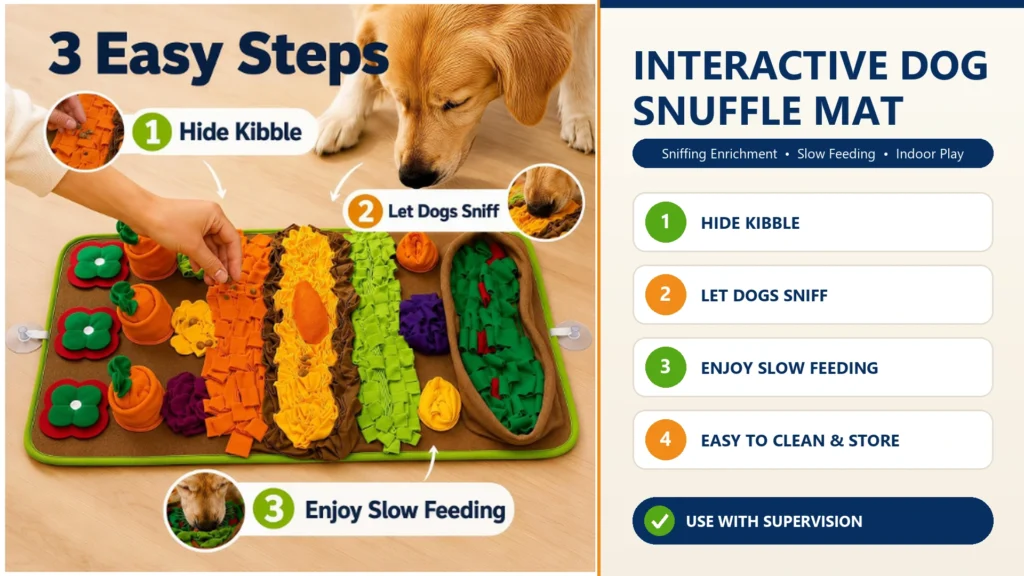
The pictured ANZELAE designs include layered strips, flowers, pockets and raised shapes. Use only one new hiding style at a time, even when the dog snuffle mat offers several activity zones.
Day 4: Rotate the Type of Challenge
Put the mat away today and offer a different short search. Hide a familiar dog toy behind an open box, place a few pieces of kibble in a safe muffin tray, or scatter food across a clean towel while you supervise.
Dog enrichment becomes easier to sustain when the routine is not completely predictable. Rotation also shows whether your dog prefers scent games, interactive dog toys, movement games or simple food puzzles.
The AKC’s indoor scent-game ideas include beginner searches using boxes, cups and muffin tins. Select objects that are clean, stable and too large for your dog to swallow.
Keep spare dog toys out of sight instead of presenting everything at once. Reintroducing an item after a break can make it feel more interesting.
Day 5: Build a Short Rainy-Day Circuit
Create three stations in one room. Keep the total routine short enough that your dog remains comfortable and interested.
Station One: Two Easy Cues
Ask for two familiar behaviors, such as a hand target and a sit. Reward each response with part of the measured food allowance.
Station Two: Snuffle Search
Place several pieces across two sections of the snuffle mat for dogs. Let your dog search at its own pace and find the last piece before moving on.
Station Three: Calm Finish
Offer fresh water and guide the dog to a normal resting place. Put away all interactive dog toys and food-search equipment.
This circuit combines training, scent work and a clear ending. It is one example of indoor enrichment for dogs, not a replacement for appropriate outdoor exercise, toilet breaks or social time.
Day 6: Teach “Find It” and “All Done”
Predictable start and finish cues make dog enrichment toys easier to manage.
Say “Find it” only when the prepared mat reaches the floor. When the dog finishes, show empty hands, say “All done,” and offer a small reward away from the mat if you need to pick it up safely.
Do not chase your dog around the room or pull the mat from its mouth. If your dog guards food or growls when you approach, separate pets and seek help from a qualified reward-based professional.
Finish by checking the fabric for trapped food, loose stitching or damaged parts. Dog puzzle toys should also receive a quick inspection before and after use.
Day 7: Build the Routine Your Dog Actually Needs
Repeat the version your dog enjoyed most. Do not increase the difficulty just because a week has passed.
Review your notes and answer four questions:
- Which hiding level kept the dog engaged without frustration?
- Did the dog sniff, paw, flip or chew the mat?
- Was breakfast kibble more practical than extra treats?
- Did the dog finish comfortably and leave the mat when asked?
These answers matter more than a universal timetable. Some dogs enjoy a brief daily search. Others prefer a snuffle mat for dogs a few times each week as part of a wider rotation.
Snuffle-Mat Troubleshooting
My Dog Grabs and Shakes the Mat
Return to visible food on the surface and hold the session on a stable, non-slip area. End the game if shaking turns into tearing. A fabric dog toy cannot remain safe after seams or layers become damaged.
My Dog Chews the Fabric
Remove the mat calmly and offer an appropriate chew product. Do not hide food more deeply in an attempt to keep the dog busy.
Some strong chewers and dogs that swallow fabric may not be suitable candidates for this type of dog toy. Choose sturdier interactive dog toys designed for their chewing style.
My Dog Finds Everything in Seconds
Spread the same measured quantity across more sections. Change the location of the pieces and add only one deeper hiding level.
Fast completion does not mean the activity failed. The purpose is to create a safe search, not to keep the dog occupied for a promised number of minutes.
My Dog Shows No Interest
Use familiar kibble and place it fully on top. Try the activity before the normal meal rather than immediately afterward.
Stop after a short attempt if the dog walks away. Indoor activities for dogs should reflect individual food motivation, age, health and preferences.
Two Dogs Compete for the Food
Use separate rooms, separate mats and separate food portions. Do not expect two dogs to share dog enrichment toys that contain food.
If either dog guards food, toys or space, manage them separately and obtain professional guidance.
Adjust the Plan for Different Dogs
Dog enrichment should change with age, mobility, food motivation and chewing style. The most useful mental stimulation for dogs remains achievable while still giving the individual animal a reason to investigate.
Puppies
Use visible food, very short searches and close supervision. A snuffle mat for puppies should be removed immediately if the puppy starts chewing, digging destructively or pulling out fabric.
Senior Dogs
Place the mat on a secure surface that does not require difficult bending or repeated slipping. A snuffle mat for senior dogs should match the dog’s mobility and normal feeding position.
Ask your veterinarian about suitable indoor activities for dogs with pain, reduced mobility, dental limitations or medical diets.
Fast Eaters
Spread part of the measured meal across broad, easy sections. A dog slow feeder should make food take longer to reach without making the dog frantic.
Observe the first sessions closely. Stop using the mat if the dog flips it, gulps loose piles from the floor or becomes distressed.
Dogs That Need More Variety
Alternate scent searches with reward-based training, appropriate walks, tug, fetch and other dog toys. No single product provides every type of physical, social and mental stimulation for dogs.
Frequently Asked Questions
Can Dogs Use a Snuffle Mat Every Day?
Some dogs can use one regularly when the food comes from their measured daily allowance and every session remains supervised. Adjust the frequency to the dog’s interest, diet and behavior.
Can I Put a Complete Meal in the Mat?
You can use dry kibble from a normal meal if the portion, food size and difficulty suit your dog. Beginners may do better with only part of the meal while they learn the activity.
Is a Snuffle Mat a Slow Feeder for Dogs?
It can make individual pieces of dry food take longer to find, but results vary by dog and mat layout. It should not be treated as a medical device or as a guaranteed solution for rapid eating.
Can I Use Wet Food?
Dry food is usually easier to distribute and remove from fabric. Use wet food only if the manufacturer confirms the mat is suitable, and clean it thoroughly immediately afterward.
Can a Snuffle Mat Replace a Walk?
No. Scent searches provide mental activity, but dogs still need appropriate exercise, outdoor toilet opportunities, training, rest and social interaction.
Can I Leave the Mat Out While I Am Away?
No. Supervise the activity and store the mat when it ends. It is not an unsupervised chew toy.
How Should I Clean It?
Shake out crumbs after every use and follow the product’s washing instructions. Let every section dry completely before adding food again.
Which Design Should I Choose?
Select a size and difficulty that match your dog and available floor space. The ANZELAE collection includes Garden, Beach, Flower Maze, Extra Large, Floral Square and Turtle layouts.
Continue Beyond the Seven-Day Plan
The goal of dog enrichment is not to complete seven increasingly difficult tests. It is to discover which dog toys fit your dog’s real preferences and daily routine.
Keep food portions measured, supervise every search and lower the difficulty when your dog appears confused or frustrated. Rotate the mat with other dog puzzle toys, scent games, training and suitable physical exercise.
Explore the ANZELAE interactive dog snuffle mat to compare the available layouts, or browse more https://anzelae.com/product-category/dog/ for a balanced weekly rotation.